

More of an audio listener? Listen now to learn the most successful lead magnet ideas.
Or download the transcript here
Lead magnets—also known as opt-in incentives, freebies, or downloadables, are essentially a free offer, typically a resource like a PDF, given in exchange for someone’s email address. It's a strategic way to grow your email list by providing value upfront.
Lead magnets come in many forms. Yes, PDFs are popular, but other examples include quizzes, webinars, challenges, and even discount codes. In fact, something as simple as signing up for a VIP club could be considered a lead magnet, as it offers a perk for joining your community. The idea is to entice potential leads by offering them something valuable in exchange for their contact information, which then allows you to build and nurture a relationship with them over time through email.
Growing your email list this way is crucial because it builds a base of potential customers for your products or services. Once someone opts in, you can send them a welcome series and follow-up emails that nurture and engage them, ultimately converting them into paying customers. It’s the first step in building a sustainable business using email marketing.
Now, if you’ve tried creating a lead magnet before but found it didn’t get the results you hoped for, you’re not alone! Lead magnets can sometimes be more challenging than they seem. In fact, I’ve dedicated an entire podcast episode—episode 24—to address this issue. In "Why Your Email List Isn’t Growing," I discuss the common pitfalls that prevent lead magnets from performing effectively. However, for now, I want to zoom in on the lead magnets themselves—what’s working and why.
Lead magnets have been around for a long time. Over the years, it’s spread beyond online businesses to even brick-and-mortar stores, which is fantastic for growth. However, there's a problem: the market is now saturated. What used to work when lead magnets first gained popularity no longer has the same impact. People have wised up to the strategy, and they’re much more protective of their email addresses. They know that once they sign up, they’re likely to be marketed to, and they’ve become more selective as a result.
Unfortunately, a lot of advice out there is outdated. Many people are still following the strategies that worked for those early online entrepreneurs, even though the landscape has shifted. When I started my business eight years ago, I could get away with offering a generic "top marketing tips" guide, but today, that simply wouldn’t cut it. People expect more, and I can’t blame them. The market is too crowded with similar offers, and standing out requires creativity, which is why exploring fresh lead magnet ideas is essential for success today.
So instead of relying on those old methods, we need to adapt and embrace what’s working now. The key is to get creative and have fun with your lead magnets, offering something that truly resonates with today’s audience and stands out in a sea of offers.
What’s Not Working Anymore?
- Generic Top Tip Guides or Roadmaps
The first thing to avoid: generic top tip guides or roadmaps. If the content you're offering is something people could easily find elsewhere—like in a quick Google search or a 30-second TikTok video—why would they hand over their email address for it? In today’s digital age, information is everywhere, and people are becoming savvier about the value of their inbox space. Offering something too broad and easily accessible simply won’t cut it.
When your lead magnet feels like a 30-second TikTok, it's not providing enough value to justify the exchange of an email address—unless you're already a massive, well-known influencer. For most businesses, this won't work. The same goes for generic self-care tips or any kind of broadly defined content. People don’t need another “Top 5 Tips for Self-Care” when they can find that content in multiple places online.
However, there is an exception: specificity. If your lead magnet is highly targeted and speaks directly to a niche pain point, then it becomes more valuable. For example, instead of “Self-Care Tips,” try “5 Key Steps to a Calming Evening Routine for Busy Mums.” The more you drill down to a specific audience and their unique problem, the more your content will resonate.
- Big EBooks and Ultimate Guides
Another approach that's falling out of favour is the use of lengthy eBooks and ultimate guides. While these can seem more appealing than the overly generic content mentioned above, they often end up gathering virtual dust. Picture this: someone downloads a giant eBook with every intention of reading it later, but they never get around to it. It sits in their downloads folder or inbox, untouched. If the lead magnet is too long or overwhelming, people may not engage with it at all. And if they don’t engage, they’re less likely to take the next step and buy from you. People don’t want more information—they want actionable insights they can implement quickly.
- Generic Industry Content
A third approach that isn’t as effective is generic industry content, even if it’s presented in the form of a checklist. Sure, checklists can make for fantastic lead magnets—if they offer something different. Take the wedding industry, for instance. Almost every wedding planning site has a wedding checklist. Brides only need one checklist, so the competition is steep. If your checklist looks like everyone else’s, why would anyone choose yours? You must think outside the box. If everyone in your industry is offering the same type of content, it’s time to zag while they zig.
- Discount Codes and Free Shipping Offers
While these may still have a place, particularly in e-commerce, they aren't the strongest lead magnets for building a broader audience. Discount codes or free shipping are typically attractive only to people who are already on the brink of making a purchase—they're fence-sitters. These tactics can help convert those potential buyers, but they won’t attract those who are still in the browsing or research phase. We want to catch people earlier in the process, before they’ve decided whether they’re ready to buy.

What’s Working Now?
Get your pen and paper out. Here are some of my favourite and most successful lead magnet ideas you can use:
1. Ideas Lists
The first of the lead magnet ideas is the ideas lists—simple but highly effective. This is where you help your audience come up with a range of ideas they can use right away. Whether it’s marketing strategies, social media posts, recipe ideas, or ways to keep kids entertained, idea lists are a fantastic resource that saves your audience from decision fatigue. For example, I offer 80+ fill-in-the-blank email ideas at yaelkeon.com/ideas. The beauty of this lead magnet is that it removes the mental burden of coming up with ideas. Your subscribers can simply download, print, and use these lists, giving them instant value.
2. Workbooks
Next are workbooks, which are incredibly useful for helping your audience take action. Workbooks guide users step-by-step through a process, often based on topics you've already covered in your blog, podcast, or videos. For example, I offer the “Which Email Marketing Software Workbook” at yaelkeon.com/software. It walks people through choosing the best email platform for their needs. You can also create reflection-style workbooks to help users apply the knowledge they’ve learned in a meaningful way, like journal prompts or action plans. The key here is facilitating that moment of decision or insight for your audience.
3. Planners
Planners are another big hit. From daily schedules to meal planning to social media calendars, people love tools that help them stay organised. Planners encourage users to take action and structure their days, weeks, or months efficiently. Whether it’s a fitness planner or a content strategy calendar, these resources help people put knowledge into practice in an actionable way, making them more likely to return for future content or services.
4. Checklists
Checklists provide a simple but powerful framework. They’re more actionable than a general guide because they break a process into small, digestible steps. For example, a checklist could guide someone through setting up an email marketing campaign or organising a product launch. By giving your audience a quick win, you’re also building trust. A focused checklist, especially when it's specific to your niche, can be invaluable.
5. Swipe Files and Templates
Who doesn’t love a good shortcut? Swipe files or templates are one of the most sought-after lead magnets. These can be anything from email templates, Canva graphic layouts, or even complete workflows like email automation sequences. People appreciate resources that are easy to adapt and implement, saving them time and effort.
6. Spreadsheets or Calculators
Spreadsheets and calculators are fantastic for audiences that love data or need to simplify complex calculations. Whether it's a budgeting spreadsheet, a mortgage calculator, or a pricing tool for services, these are high-value lead magnets that provide tangible, practical help. All your audience needs to do is input a few numbers, and they get valuable insights or results—without having to build the formulas themselves!
7. Quick Reference Guides or Cheat Sheets
Another fan-favourite out of the lead magnet ideas is a quick reference guide or cheat sheet. These are incredibly useful for people who want easy-to-access information, like a printable chart of cooking measurement conversions or a quick guide to Photoshop keyboard shortcuts.
8. Quizzes
Quizzes are another effective, though slightly more complex, lead magnet. People enjoy interactive content, but the secret to success with quizzes is offering ungated results—let your audience see their quiz outcome without needing to enter their email. Instead, tie the freebie to the quiz result. For example, a quiz about choosing the best email marketing software could lead to a custom resource like an ActiveCampaign getting-started guide. Quizzes can be a more involved process to set up, but when done right, they offer personalised solutions, which audiences love!
9. Audio Trainings
While video content is popular, audio trainings are gaining traction as people are looking for on-the-go learning options. You could offer an exclusive podcast series or a downloadable audio training that provides bite-sized lessons for your audience. This stands out among the overwhelming amount of video content and allows people to absorb information while multitasking.
10. Webinars or Masterclasses
Webinars are tried-and-true out of all the lead magnet ideas, but to make them more accessible, allow users to watch them anytime. While live webinars are great for launches, an evergreen webinar that can be watched on demand adds long-term value. Keep it concise—20 minutes packed with value can have just as much impact as a longer session, without overwhelming your audience.
11. Video Tutorials
If your expertise is in a technical or practical area, video tutorials are gold. You can show people how to use software, complete tasks, or even set up automation sequences. Even though you're giving away some of your knowledge, it can often lead to people wanting more in-depth help, and they may eventually hire you for more advanced services.
12. Email Courses
Email courses are a perfect way to deliver value over a period. Whether you’re teaching a new concept every day for a week or offering a structured challenge, these courses build momentum and encourage subscribers to stay engaged. You can mix in videos, audio, or even text-based lessons, but the key is having a clear end goal that the audience is working toward.
13. Exclusive Regular Content
Another option is offering something that delivers ongoing value, like a monthly bundle or subscription-style content. This could be anything from social media post ideas to stock photos, or even a monthly play planner. Subscribers love knowing they’ll receive something fresh and useful every month, giving them a reason to stick around.
14. Toolkits or Bundles
Finally, you can take things to the next level by combining several of these lead magnet ideas into one bundle or toolkit. For example, you could offer a package that includes an audio training, a checklist, and a swipe file all in one. While it takes more effort to create, the perceived value is much higher, making it a no-brainer for your audience to sign up!
I hope I’ve been able to shed some light on the changing landscape of lead magnet engagement…
If your PDF filled with tips isn't resonating, it's not your fault. For years, we were told that traditional strategies would always work, but the internet has become saturated with information.
Today, people can easily find answers online without needing to sign up for gated content. This shift calls for a new approach: instead of just delivering information, we need to foster action and provide standout value.
Think about how you can create immediate wins for your audience. What shortcuts can you offer? Is there a timely, niche topic you can address?
By focusing on these elements, you can engage your audience more effectively and empower them with actionable insights that lead to real results.
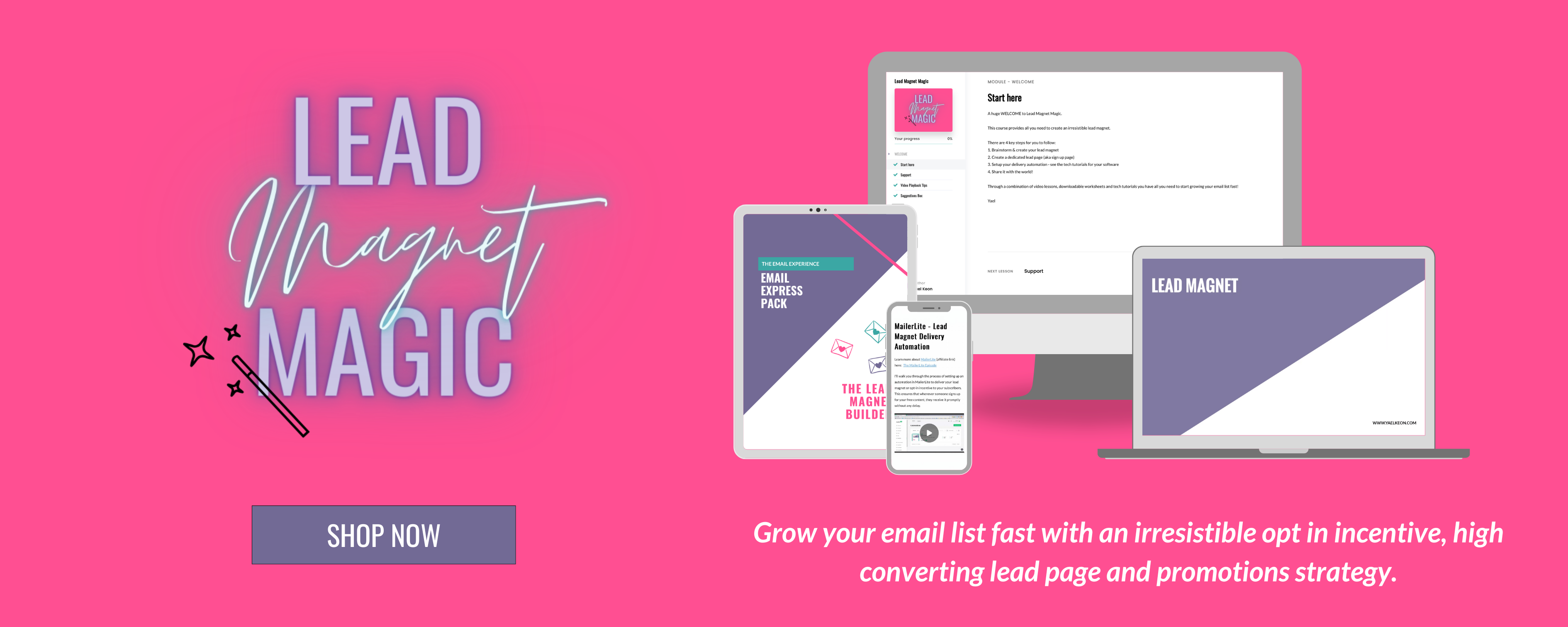
If you're seeking more detailed guidance on creating effective lead magnets that truly resonate with your audience, I highly recommend checking out my Lead Magnet Magic course at yaelkeon.com/magic.
RELATED POSTS

The Ultimate Guide to Email Marketing Planning
Email marketing planning doesn’t have to feel overwhelming or rigid. This guide walks you through a calm, sustainable approach to planning your emails so you can stay consistent, support your sales goals, and build an email system that actually fits your real life.

How to Get Your First Email Subscribers
Getting your first email subscribers doesn’t have to be complicated. In this post, you’ll learn a simple, beginner-friendly process to set up your sign-up form, connect your tech, and start growing your list with confidence.

The Lead Magnet Refresh You Need to Attract Leads
That lead magnet you created isn’t dead—it just needs a smart refresh. Discover 3 powerful tweaks to help you attract leads fast without starting from scratch.
